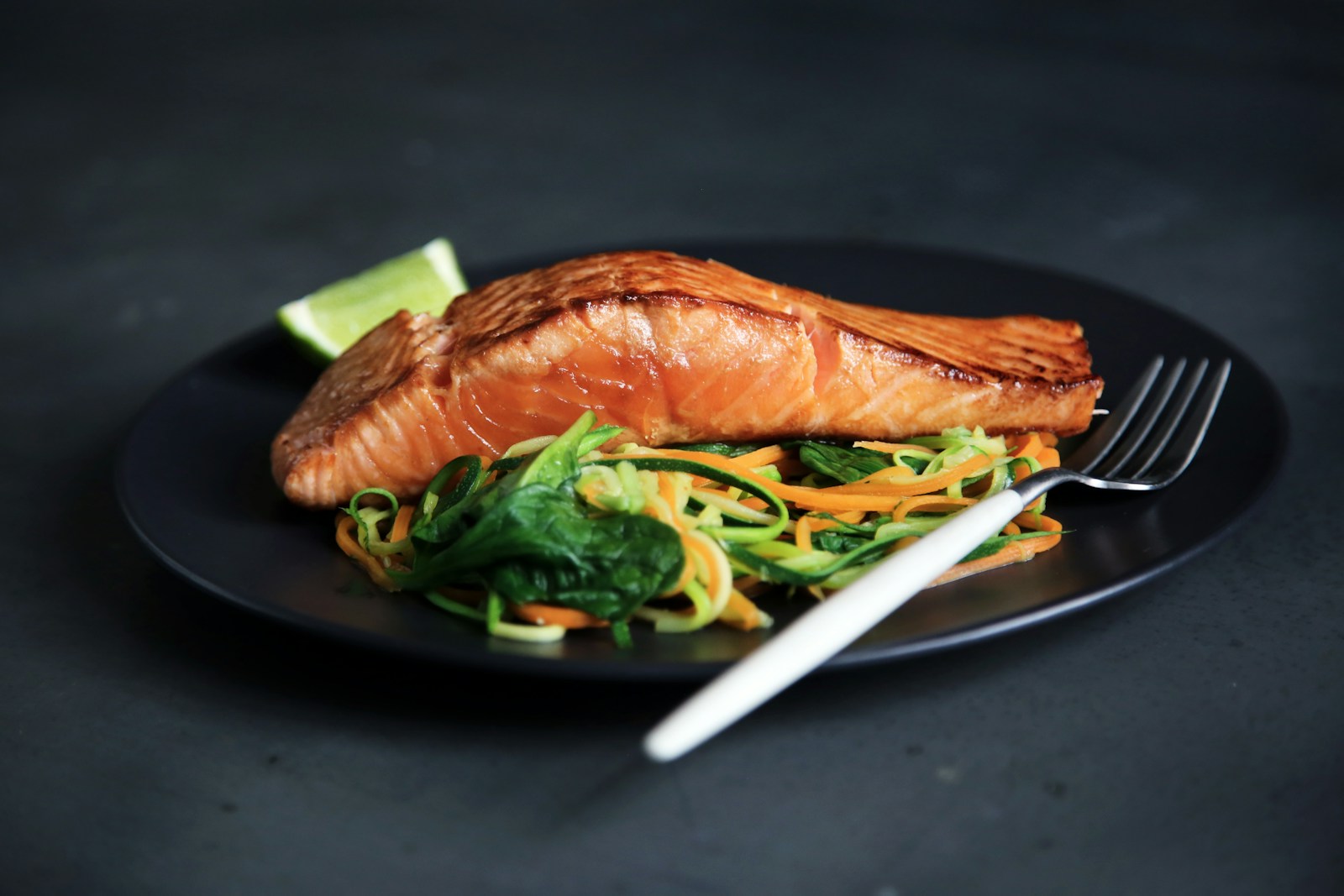
The strongest pescatarian kitchen does not treat fish as a reward for avoiding meat. It builds a table around seafood, vegetables, beans, grains, eggs or dairy if they fit, sharp sauces, crisp textures, pantry tins, and enough practical rhythm that fish becomes a weeknight ingredient instead of a special-event negotiation.
Pescatarian eating excludes land meat: no beef, pork, lamb, poultry, game, bacon, sausage, or meat stocks as the quiet background note. Fish and seafood stay on the table, alongside vegetables, fruit, beans, lentils, whole grains, nuts, seeds, eggs, and dairy if your version includes them.
That makes it different from vegetarian eating, which excludes fish, and different from the Mediterranean Diet, which is a broader pattern built around olive oil, legumes, plants, whole grains, seafood, moderate dairy, and limited red meat. Pescatarian is defined first by the no-land-meat boundary, then by how well the kitchen uses seafood and plants together.
The best version is practical. Canned sardines can become toast, pasta, salad, or rice bowls. Frozen shrimp can save a Tuesday. Mussels cook faster than takeout. White fish can be sheet-panned with vegetables. Salmon, trout, mackerel, anchovies, tuna, clams, crab, squid, and scallops all bring different textures, costs, and cooking speeds.
Use this as a cooking guide, not a purity test. Pay attention to protein, omega-3 fats, iron, B12, iodine, vitamin D, calcium if dairy is limited, and enough total food. Mercury and sustainability are worth knowing about, but they do not need to turn the seafood counter into a place of fear.
Use it for Pescatarian cooking is a tide pool, not a loophole.