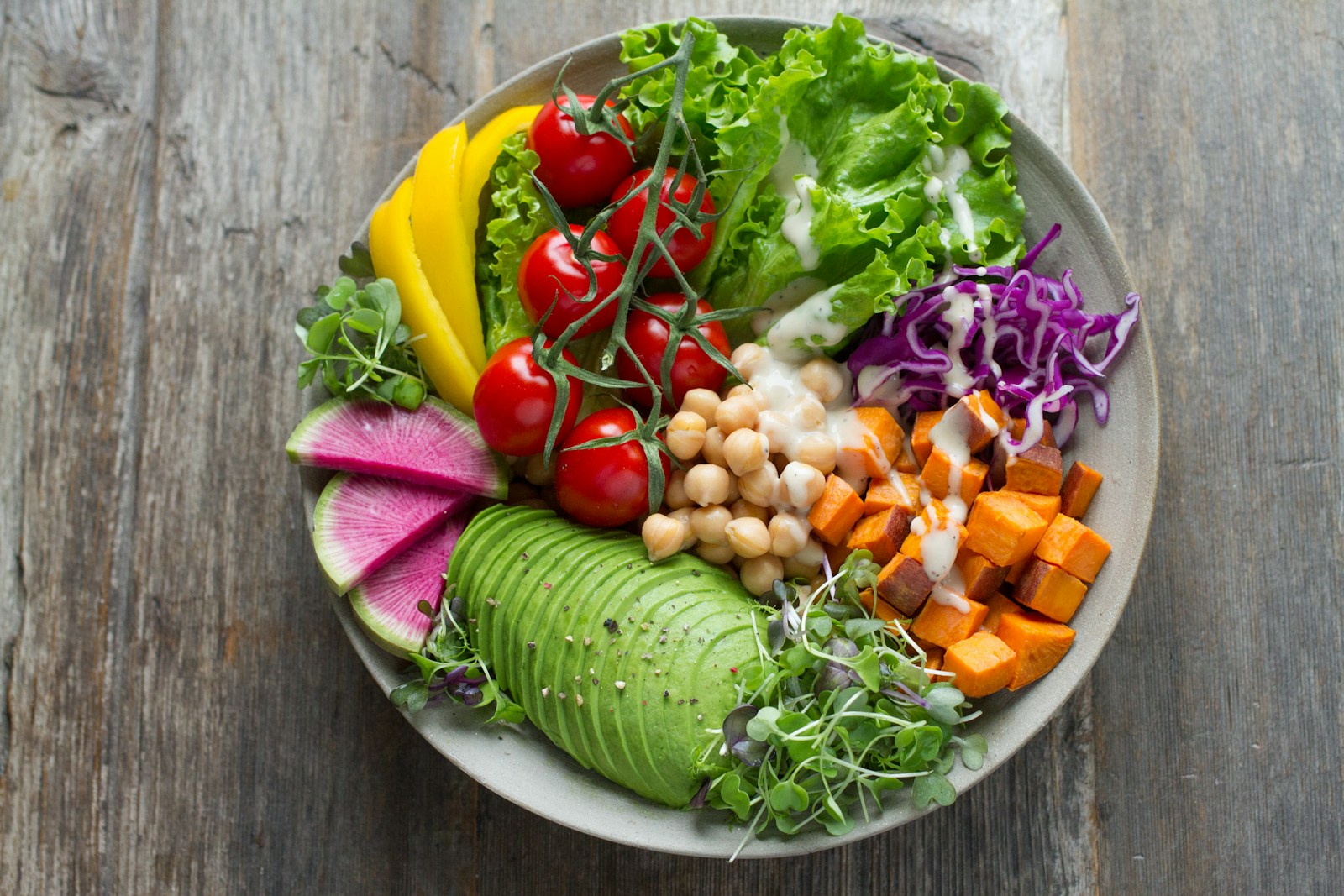
The useful version is carb-aware, fiber-forward, protein-supported, and realistic about medication, appetite, culture, budget, and glucose response. It does not erase bread, fruit, beans, grains, dessert, or pleasure. It asks what portion, what pairing, what timing, and what actually happens for you.
Diabetic-friendly cooking focuses on meals that make carbohydrates visible and intentional. Carbohydrates can come from bread, rice, pasta, tortillas, potatoes, fruit, milk, yogurt, beans, lentils, sweets, snack foods, and drinks, so the practical question is not only whether a food contains sugar. It is how the whole meal is built.
A steadier plate usually has non-starchy vegetables, a protein anchor, a measured carbohydrate, fiber where possible, and enough fat or sauce to make the meal satisfying. Whole grains, beans, lentils, vegetables, fruit, nuts, seeds, fish, poultry, tofu, eggs, yogurt, olive oil, herbs, vinegar, and spices can all belong depending on personal needs.
There is no one universal diabetes diet. Glucose response can vary by person, portion, sleep, stress, activity, medication, insulin, illness, menstrual cycle, alcohol, hydration, and timing. A continuous glucose monitor, meter, food log, and care team can help interpret patterns without turning every meal into a moral test.
Use it for Diabetic-friendly cooking is not sugar-free punishment. It is a steadier way to build the plate.