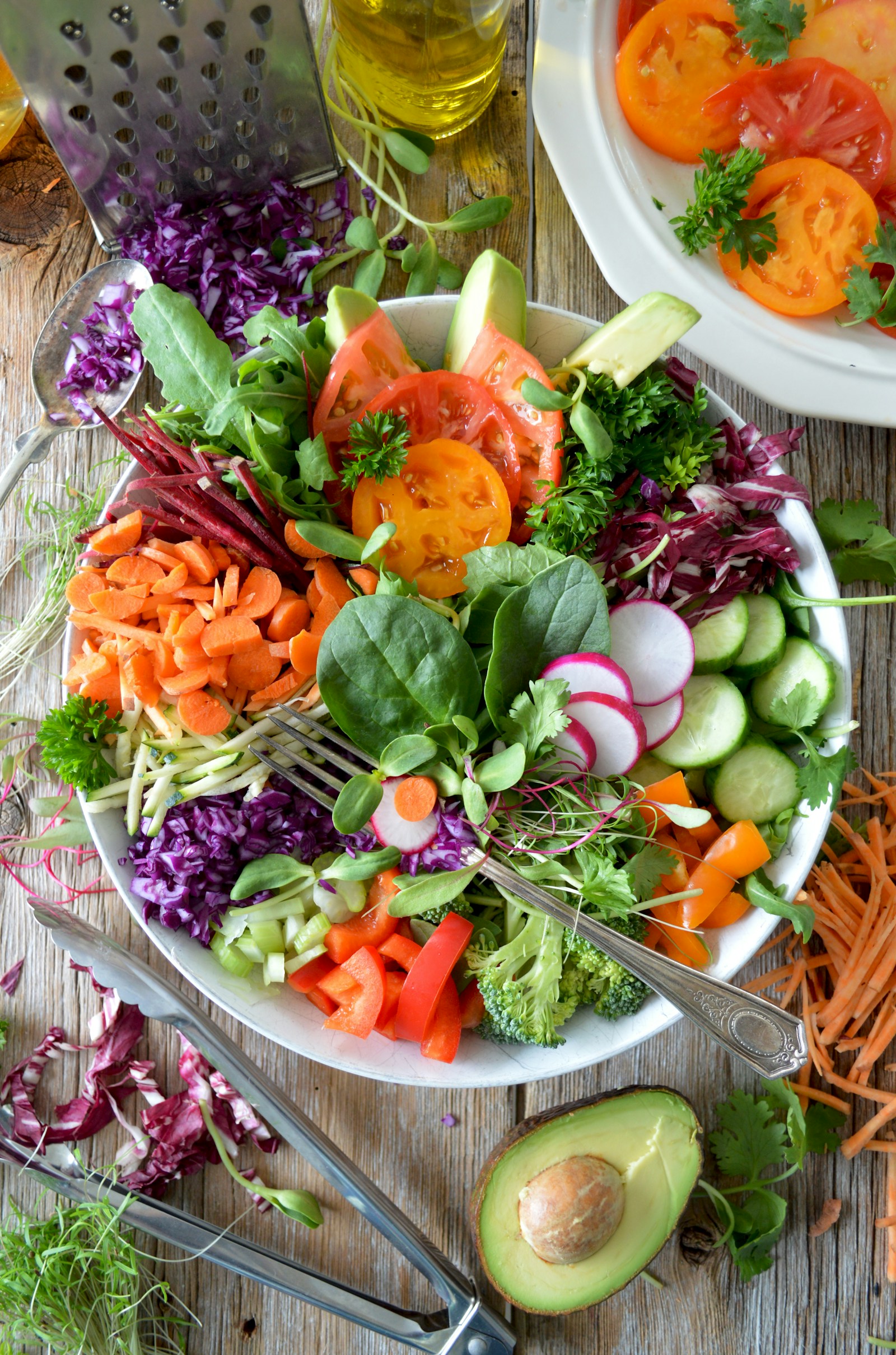
The useful version is practical and modern: vegetables in real volume, fruit with intention, meat, fish, and eggs as anchors, nuts and seeds for crunch and richness, sweet potatoes and squash for satisfying starch, and a pantry that skips grains, legumes, dairy, and most packaged shortcuts without turning dinner into a lecture.
Paleo is a grain-free, legume-free, dairy-free cooking pattern built around vegetables, fruit, meat, poultry, fish, seafood, eggs, nuts, seeds, herbs, spices, and whole-food fats. In the kitchen, it changes the default plate: rice, pasta, bread, beans, lentils, milk, cheese, yogurt, and conventional baked goods move out of everyday use, while roasted vegetables, salads, eggs, fish, sheet-pan meats, sweet potatoes, squash, avocado, olive oil, coconut milk, and nut-based sauces move in.
The strongest Paleo meals are not just meat with a side salad. They need the same structure as any good dinner: a protein anchor, generous vegetables, enough starch or fat to feel satisfying, acid, salt, herbs, and texture. Sweet potatoes, winter squash, plantains, beets, carrots, parsnips, and fruit can make Paleo feel grounded instead of sparse.
Use this hub as a cooking guide, not a medical plan or a story about the past. Paleo can be adapted many ways, but it also removes major food groups that many people rely on for budget, culture, calcium, fiber, and everyday ease. If you have a medical condition, pregnancy, eating disorder history, allergies, or a nutrition plan from a clinician, personalize the pattern with qualified guidance.
Use it for Paleo cooking works best as a whole-food kitchen, not a costume drama.